IBM Vision 2012 – A great conference
IBM Vision 2012
Greetings from the JW Marriott hotel in Orlando. The IBM Vision 2012 conference for Finance and Risk Management professionals is going really well. Close to 800 professionals from all over the world are here. The atmosphere has been great so far. An event of this size allows people to easily connect with each other and to exchange a few ideas.
Keynotes
The keynotes of the events have been well received. They were action and information packed. The Tuesday morning presentations were especially insightful. Les Rechan kicked off the day with a few thoughts about the role of analytics in the office of finance. He was followed by book author Michael Mauboussin who talked about the power of counterintuition in decision making. John Hagerty from Gartner closed out the morning session with a few customer interviews.
Make sure to watch or scan through the video recording.
Stay tuned for further updates
Related Posts:
IBM Vision 2012
IBM Vision 2012
Greetings from Orlando. I left Munich Saturday morning to attend the IBM Vision 2012 conference. This three day event for finance & risk management professionals will be exciting. There are fantastic keynotes lined up as well as a ton of awesome break-out sessions. I am really looking forward to it.
Keynotes
The keynotes at IBM Vision 2012 promise to be especially interesting this year. The list of external speakers includes John Hagerty from Gartner, book author Michael Mauboussin and Everest explorer Alison Levine. Of course, there are also exciting IBM speakers including Les Rechan (GM for Business Analytics) and Mark Loughridge (CFO of IBM). I will be showing some great new solutions as part of the general keynote Tuesday morning from 11am – 12am EST.
Join the conversation
For those of you who will attend IBM Vision 2012, please do reach out to me (@cpapenfuss). I would love to connect. If you cannot attend the conference, you can still participate in the conversations. There are two main options:
- Join via Twitter. The official hashtag is #vision12 . Also, make sure to follow @ibmcognos for updates. I will try to tweet whenever possible.
- View the keynote sessions from your desk via Livestream. All keynote sessions will be broadcast and should be available for viewing after the event as well.
Stay tuned for updates!
Related Posts:
Part 2 – Interview with the TM1 book author. More about TM1
Last Thursday, I posted an interview with the author of the new TM1 book Karsten Oehler. Here is the continuation of the conversation. This part of the interview focuses on the new IBM Cognos TM1 10.1 release.
Christoph Papenfuss: IBM Cognos TM1 10.1 was released in February of 2012. What is so special about this release?
Karsten Oehler: One of the central components of version 10.1 is a new modeling environment. It is called Performance Modeler. It really encourages finance and business professionals to develop their own models. Performance Modeler allows them to develop complex rules and links. You can also easily import data into applications. None of this requires deep technical knowledge.
Christoph Papenfuss: Does Performance Modeler replace Architect?
Karsten Oehler: Performance Modeler is an enhancement. The user can choose which tool to use. Architect is closer to Excel and has some features which are currently not supported by Performance Modeler. This includes dynamic subsets and report generation of Excel sheets from the cube viewer.
Christoph Papenfuss: There is a new desktop tool call Cognos Insight. It looks similar to TM1. Is there a relationship or connection between the products.
Karsten Oehler: Cognos Insight is a very powerful desktop tool that allows business people to conduct analysis, explore data and to develop prototypes. TM1 and Cognos Insight are closely connected – a local TM1 engine is part of Cognos Insight. It uses the same rule syntax and a simplified Turbo-Integrator version for data import. You can also import Cognos Insight models into Performance Modeler and refine them further.
Christoph Papenfuss: What is the advantage of using Cognos Insight in the planning process along with TM1
Karsten Oehler: There are two aspects: Planning applications are often created by prototyping. Cognos Insight is a great tool to express ideas and to develop prototypes. Secondly Cognos Insight can be used an additional front-end for contributors to the planning, budgeting and forecasting process.
Christoph Papenfuss: Who should use Cognos Insight as a client for planning and forecasting models?
Karsten Oehler: TM1 has strong tools to support a highly decentralized planning and forecasting process. I recommend to use the IBM Cognos Contributor front-end because it is easy to distribute (non-local installation). With TM1 10.1 you can also integrate web sheets created via the Excel add in. However if somebody is using Insight for data discovery it is very interesting to contribute to the planning process directly within Cognos Insight. Another advantage is the scalability: With Insight it is possible to let the local insight engine do all the calculation which is needed for the planning slice assigned to the user.
Christoph Papenfuss: What do you like best about TM1?
Karsten Oehler: It is definitely the rule language. It is the most compact way to formulate all kinds of calculations to solve all kinds of business problems. The most complex cost and profitability calculations often look pretty easy after modeling them with TM1 rules.
Christoph Papenfuss: Thank you so much, Karsten!
You can purchase the TM1 book on Amazon.com: IBM Cognos TM1 – The Official Guide
About Dr. Karsten Oehler (author of the TM1 book):
Karsten is head of the Performance Management Client Technical Professionals at IBM Germany. Prior to joining IBM, he spent more than 15 years with several international software companies as a product manager, marketing executive, and consultant for financial accounting and business intelligence software. He has published several books and well over 130 articles about business analytics.
Related Posts:
Interview with the TM1 book author: IBM Cognos TM1 – The Official Guide (Part 1)
The new TM1 book
The highly anticipated 10.1 version of IBM Cognos TM1 was released in February 2012. Along with the software there is also a great new TM1 book: IBM Cognos TM1 – The Official Guide. My German colleague Karsten Oehler is one of the authors of this comprehensive TM1 book. We had the opportunity to catch up last week. It was very early in the morning and we were both on our first cup of coffee. This is the first part of two short interviews. Check back Tuesday next week to read more.
Christoph Papenfuss: Let’s start this discussion with an important question. TM1 is a strange product name. What does TM1 stand for?
Karsten Oehler: The name sounds still fresh and interesting after 25 years, right? Oh well…..it is an interesting name, indeed. And we do get a lot of questions about it. Here is the truth. Don’t be shocked – it stands for Table Manager 1. And it is the solution No 1 from my point of view.
Christoph Papenfuss: What is TM1? Can you describe it in an elevator-speech style?
Karsten Oehler: Cognos TM1 is the universal tool for the business person wanting to do all kinds of analytical work like forecasting, planning, simulation, analysis and reporting. Some people call it the ‘Swiss Army Knife’ for the business. The only thing it can’t do (yet) is to cook coffee
Christoph Papenfuss: Who can use IBM Cognos TM1 and why should they?
Karsten Oehler: Everybody with a need or desire to perform analytical work should use TM1. TM1 links typical analytical office work (Excel) with a high performing analytical database. However it doesn’t require that much conceptual overhead so that a business user is able to define his own data structure. TM1 doesn’t replace spreadsheets or data warehouses. It literally brings both worlds together.
Christoph Papenfuss: There are many planning, budgeting and forecasting solutions out on the market. What makes IBM Cognos TM1 so special?
Karsten Oehler: I am heading up a research group at the Controller Verein, the biggest European community for management accountants and finance experts. We describe several classes of planning tools: spreadsheet enhancements, ERP enhancements, OLAP, specific (financial) planning solutions and generic planning solutions. The last category is the most powerful one because it provides a lot of flexibility while also allowing you to leverage strong predefined planning functions like workflow, simulation, financial intelligence. Within this group TM1 is the best one because it has the most modern architect (scalability, write back queuing, rule optimization, batch processing environment) and the newest interface.
Christoph Papenfuss: Is TM1 just for planning, budgeting and forecasting?
Karsten Oehler: Absolutely not! As I mentioned before, TM1 is extremely powerful and flexible. Planning, budgeting and forecasting is just one area where TM1 can add tremendous value. Other important areas where TM1 excels at is profitability and sales analysis, costing (an area where TM1 is extremely strong), management consolidation, and last but not least production planning.
Christoph Papenfuss: You have just released the book IBM Cognos TM1 – The Official Guide. What prompted you to write this book?
Karsten Oehler: When you look at the bookstores and see shelves of SAP books and hardly any book about the best analytical tool, you have to scratch your head. We wanted to change that. Also, together with our customers we had developed a lot of valuable business content over the past decade. We really wanted to share this with others.
Christoph Papenfuss: What can you expect to learn from the book?
Karsten Oehler: How to live a better life – just kidding. No, in all seriousness it should help you with your daily TM1 work. It explains the architecture in a focused and structured way. This is an area where the standard documentation is sometimes a bit too extensive. Also, we have included a ton of business content. There are several small models that explain how TM1 can solve specific business problems like rolling forecasting, inter-company matching, variance analysis, activity based management etc..
Christoph Papenfuss: Who should read the book?
Karsten Oehler: Anybody who has an interest in TM1! Early feedback shows that power users and business consultants are the primary readers of this book.
Christoph Papenfuss: What is the best way to read your TM1 book? Is it more like a workbook or a resource guide that you pull out when you need it?
Karsten Oehler: Of course you could read the entire book, but I wouldn’t recommend that. It’s 800 pages strong! I would rather suggest to focus on just those business areas that you are interested in. Simply read it section by section. I would imagine that most people will use the book as a powerful reference.
Christoph Papenfuss: IBM recently released TM 10.1 . Do you cover the latest version in your book?
Karsten Oehler: We certainly cover it but it was not easy because there were a lot of short term changes in the development process. The business models are backward compatible. We wanted to make sure that users from the older releases are also able to leverage the book.
To be continued next Thursday…..the second part will focus on the 10.1 release.

About Dr. Karsten Oehler (author of the TM1 book):
Karsten is head of the Performance Management Client Technical Professionals at IBM Germany. Prior to joining IBM, he spent more than 15 years with several international software companies as a product manager, marketing executive, and consultant for financial accounting and business intelligence software. He has published several books and well over 130 articles about business analytics.
Related Posts:
You have ten minutes to complete that task! Working smarter not harder
No more riots
Today is May 1st. Most European countries are off work to remember labor day. May 1st is indeed a historical date. In 1886, workers in Chicago and other cities laid down their work to demand better working conditions including eight hour working days. The situation escalated over the next few days and several people died. The event is remembered as the Haymarket Riots. Since then working conditions have improved considerably. However, despite the standard eight hour working days, many of us are often forced to work more than that. There is just too much stuff. But longer hours do not necessarily increase quality. It is therefore important that we take time to figure out ways to work smarter.
Productivity increase
Last summer a friend shared a very simple but effective productivity technique. Ikea founder Ingvar Kamprad supposedly came up with the idea for it. The technique is super simple: Divide your work in 10-minute increments. Let’s say you to book travel for an upcoming business trip. It’s easy to waste a lot of time on researching hotels and prices. But give yourself ten minutes to get the task done. Guess what happens: You will do your best to get everything done within that time limit. Your productivity increases while you spent less time on unimportant things.
The power of ten
The ten minute idea works really well for me when I need to get stuff done that I am either not good at or that I really dislike. In the past I have found that I tend to either procrastinate those tasks or that I get side-tracked while doing them. But allocating a ten minute budget really helps me get started. The task looks less daunting and I make every effort to get it done.
A great side-effect of this method is that it can really boost your confidence and motivation. I have had days when I was sluggish in the morning. Completing various things on your to-do list in record speed changes your mood and boost your confidence!
Working smarter
Most of us have great employers who treat us with respect. But the increasing workload creates unprecedented levels of stress. Also, there is a lot of distraction these days. Think about corporate messaging systems, social media, meetings etc.. Working smarter is therefore a critical skill.Try this ten minute technique. It certainly works for me. I don’t use it every day. But I do pull it out when I really need to. Happy Labor Day!
Related Posts:
I see a cake on the horizon! Meteolytix use predictive analytics to drive success
Meteolytix
Predictive analytics are an extremely hot and interesting area for most organizations. No wonder, there are some extremely cool and amazing use cases. Let’s take a look at a sweet example: cake. Bakeries around the world struggle with either reducing their waste or maximizing their potential. There are days when cakes seem to be flying off the shelves. And then there are bad days when baskets full of fresh goods have to be thrown away. Finding the right balance required luck and a great amount of intuition in the past. But the German company Meteolytix has found a better way. They have developed powerful sales forecast models that utilize weather data, historical sales and information about other contributing factors. The result is a self-learning automatic closed loop statistical model which increases revenue and lowers costs by minimizing over- and under-production. IBM SPSS is at the heart of this amazing solution.
Predictive Analytics at work
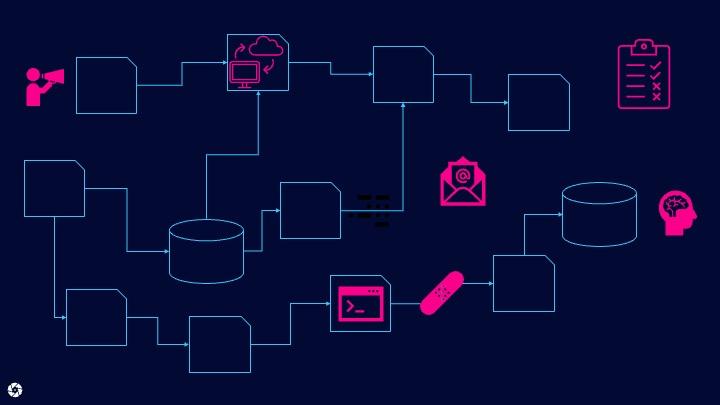
How does this work? Meteolytix offer their services to a number of large bakery chains across Germany. The Meteolytix teams feed predictive models with data that is collected from a range of sources: weather data from worldwide sensors and systems, daily sales figures from store POS systems and historical sales figures from ERP systems. Data flows into a customer-specific predictive model. The system determines daily sales forecasts for each branch and each product and dispatches them to the customer’s systems. The insights enable more exact material requirements planning, production and logistics optimization as well as considerable reduction in returns. Better control of stock levels creates increased sales and greater customer retention, and less waste of valuable food.
Better performance
Meteolytix‘s approach works. Their customers are able to reduce returned goods by approximately 33%. In addition, their customers are able to streamline the order process which saves many hours of work. The output from the models can also be used for workforce planning. I am pretty sure that this is just the beginning. Take a look at the new TV spot that features this use case. It’s fun!
The Meteolytix story
The Meteolytix story is very intriguing. They have a small team, yet they are able provide measurable and very impressive ROI to their clients. Think about your business – how could you apply predictive analytics? Do you have any interesting stories to share?
You can find a detailed case study about Meteolytix on this URL.
P.S.: Many thanks to my good friend Jen Rolfe for providing me with the delicious photo. She is a very talented baker.
Related Posts:
“Focus is key for success” says the German Cognos User Group
The German Cognos User Group
Last year, I posted an interview with Steve Veilleux, president of the Quebec Cognos User Group. This article has gotten a lot of attention. I therefore decided to reach out to another very successful user group: The German Cognos User Group. The three leaders of this organization volunteered for an interview. Please meet Kai Noack, Martin Otto and Erik Purwins.
Christoph: What is the purpose and mission of your Cognos User Group?
Kai Noack: Our group has a clear mission:
- Provide a forum for IBM Cognos users to exchange knowledge and share experiences.
- Provide deep expertise in all IBM Cognos related questions via newsletters and conferences.
- Connect with IBM management to discuss trends and potential issues.
We cover all IBM Cognos products (BI, Performance Management, etc.).
Christoph: How many members do you have and how do you communicate with each other?
Martin Otto: Our group was founded back in 1998. Membership has grown membership rapidly. We currently have over 300 active members from over 100 different companies. The group targets German speaking associates: 95% come from Germany and the remaining 5% are spread between Austria and Switzerland. Our roster of associates features active Cognos users, administrators, project managers and consultants.
We have three main communication channels:
- The website is our hub. It provides news, updates and other relevant information. There is also a discussion forum.
- Frequent newsletters
- Seminars and conferences are the ‘glue’ that hold our group together. We organize a bunch of those every year. They are very successful and provide us with the ability to develop long-lasting relationships.
Christoph: Do you have to pay to become a member? If yes, how much and how do you utilize the funds?
Erik Purwins: Our group is completely independent. IBM does not sponsor us. Anybody who is interested in IBM Cognos and Business Analytics can join our group. But we do charge for the membership. There are currently two types of memberships: Personal (100 EUR p.a.) and corporate (EUR 250 p.a.). The corporate model is very attractive as it allows up to 20 people from an organization to participate in our activities. The majority of our members have a corporate account.
The fees that we collect are used for several purposes: maintenance of our website, conferences and marketing. German law also requires us to utilize a professional accountant and external tax advisor.
Christoph: What are the benefits of being a member in the German Cognos user group?
Kai Noack: There are a number of benefits for our members:
- Education – we have a big focus on knowledge sharing. Our members have diverse backgrounds and have a lot of accumulated knowledge.
- Problem solving – our community allows us to jointly solve problems
- Direct connection to IBM – we enjoy an excellent relationship with IBM. This allows us to voice concerns, share ideas and obtain critical information
- Ability to detect trends – we frequently invite guest speakers and conduct polls
- Fun – our members really enjoy being part of the group. We are all passionate about business analytics. Being surrounded by like-minded professionals is fun and rewarding.
We strongly believe that our group is contributing to the success of the different IBM Cognos implementations in the German speaking countries. As a matter of fact, members claim that being part of the group feels like having a professional consultant available 24/7. Our combined knowledge is that rich and deep.
Christoph: Tell me more about your conferences.
Martin Otto: We typically organize 4-6 conferences and workshops per year. Some of the meetings are more general, others focus on a specialized topic. Two years ago, we hosted an event about running Cognos on mainframes, for example. The events are actually open to non-members as well. We do believe we profit from having a larger circle participate. Non-members typically pay a surcharge for participating.
We usually invite at least one representative from IBM. This provides all members with the ability to have a direct connection to IBM. At the same time, IBM benefits from being able to connect with their loyal customers. It’s a win-win situation.
Christoph: There are some regions that do not have a user group. What advice would you have for IBM Cognos sponsors and users who are thinking about forming or joining a similar user group?
Erik Purwins: There are certainly a lot of lessons.
- We highly recommend defining a clear vision for the group. Our group is focused on technical topics, for example. Having that vision provides clarity and drives success. Members know what to expect when they join us. The majority of them either have a technical background or they enjoy discussing the technical topics.
- Organize professional meetings. As mentioned earlier, they are the glue for our group. We do charge a small fee for all our meetings (in addition to the annual fee). That allows us to provide the best possible service (great locations, professional setup, etc..). Charging for attendance also acts as a filter for those people who are not passionate about the topic.
- The conferences need to be focused and need to feature relevant content. Speakers are highly encouraged to focus on specific lessons-learned that benefit the attendees. Our members therefore have the ability to gain a tremendous amount of knowledge.
- Edit your content. We actively discourage ‘sales and marketing’ type content. We learned our lesson early on when some people ‘hijacked’ a meeting to sell their services or software. Our group is not a market place for selling. Our members expect to learn something when they join our organization.
Christoph: Thanks much for your time!
You can find out more information about the German Cognos User Group on their homepage.
Related Posts:
Are you kidding me? There is more than just the tools!
Wasted time
Do you enjoy wasting time? I surely don’t and I do not have patience engaging in activities that do. Unfortunately, over the past few months I did witness several completely useless discussions about tools and their specific features and functions. So much wasted time and energy! While everybody focused on boasting & bitching, core issues were completely ignored. This is so wrong! But let’s back up for a second…
Tools, tools, tools
Back in February, my favorite camera manufacturer released a groundbreaking piece of equipment. The discussion forums and relevant blogs were going crazy for a while. People expressed their enthusiasm for the new features. However, the general tone in the discussion forums quickly turned sour. Photographers were lashing out at each other. It got really stupid (“Do you know how to count megapixels!”) and the discussions were far removed from the subject that should be at the core: photography. Photography is about taking great photos that touch people. It’s not about pixel peeping. One person made an especially smart comment: “Finally. This is the camera that provides me with endless freedom. All other cameras in the market have limited my creativity so far.” Oh well…..I am sure Ansel Adam would hold his belly laughing on the floor. His creativity was truly limited by his huge camera and the heavy stacks of film plates…..NOT!
Business Analytics
There is a similar issue in business analytics. We sometimes spend too much time thinking and talking about the tools. Back in my Big 5 days, I sat with a client who was very dissatisfied with his BI tools from a certain vendor. He claimed that the lack of gauge charts amongst two other things explained the low user adoption. Guess what – the company bought a different tool but the dashboards still sucked. Why? They thought the tool would provide a miracle fix. All their discussions were focused on the tools and not the business process. I am still 100% sure that they could have built a highly valuable solution with their old software. Granted, it did not look sexy. But it was highly functional. Time for a reality check: High-pixelated garbage is still worse than a low-resolution masterpiece.
“Men have become the tools of their tools.” Henry David Thoreau
What’s the issue here? A ton of time is wasted discussing tools. The sad truth is that a new tool won’t guarantee success. Poor data sources, sloppy business processes or lack of user engagement are often counteracting the new benefits. etc.. Better tools alone won’t create better output. It takes skills to put the tools to good use. A poorly composed photograph that was taken with an expensive camera is still a crappy picture. A poorly designed dashboard built with an expensive tool will collect dust. It’s that simple. Ansel Adams is one of the most admired photographers out there. He used ancient tools. Would he have been able to make even better photos with today’s equipment? Most likely, but his photographs are still absolutely amazing.
Work on your skills instead of wasting time.
Don’t get me wrong. There is a time when it is really important to think about your tools. But it can’t be the constant focus. It’s easy and comfortable to drool over or to bash a set of features and functions. It’s a lot harder to put these tools to their best use. Pixel and dashboard peeping is a form of laziness. It distracts us from what’s important. Instead, we should take the time to hone our skills: data modeling, dashboard design, visualization techniques, business trends, etc.. My prior client that I mentioned earlier never took the time to work on the inputs for the dashboards.
Well, I stopped reading the camera forums and have decided that the discussions won’t help me take better photographs. Instead, I have resorted to taking more photos, instead. Why don’t we take the time to sit down with our business partner and build a solid prototype? Why don’t we attend a training in report design? Why don’t we read an article about data visualization?
Related Posts:
Why you should add prototyping to your toolbox
The value of prototyping
Last week, I came across an excellent post by the Truly Deeply blog. It was titled ‘Brands need to Innovate or they will fade‘. The author of the blog argues that brands are under pressure to innovate their products and services. But innovating becomes harder and harder as the “future is less and less an extrapolation of the past“. While this is nothing new and surprising, the post provides an idea of how companies can stay innovative. The writer describes a technique that business analytics professionals need to be familiar with: prototyping.
Prototyping boosts thinking
The author(s) of the Truly Deeply blog describe how the famous design firm IDEO leverages prototyping to rapidly innovate. Rather than sitting down with a blank sheet of paper and waiting for inspiration, IDEO typically get immersed in a new topic that they are working on. Not only that: they jump right in the water and start prototyping new ideas very early during any given project.
“They refer to it as ‘building to think’ instead of thinking about what to build.”, The Truly Deeply Blog
But why does prototyping work for them? It kick-starts the learning process (see quote above). Prototyping allows them to play with their ideas and to expand their thinking. Let’s keep in mind: theories on a piece of paper rarely inspire. And once you have a prototype, you can start making sound decisions that are based on direct and hard evidence. This in turn can help you with obtaining commitment. This is especially important when people are risk-averse or lack understanding.
“The power of prototyping or pilot testing is you fast track moving to evidence based decision making.”, The Truly Deeply Blog
Prototyping and Business Analytics
I couldn’t agree more with the Truly Deeply blog. Prototyping is an extremely valuable technique. Every business analytics professional should add it to the toolbox. Traditional IT project management taught us that we had to write lengthy requirements and design documents. But the problem with that approach is that business and IT have a very hard time figuring out and agreeing on what is really required. I wrote about those problems a while ago. Prototyping on the other hand allows the analytics professional to rapidly understand the true requirements. At the same time, the business person can quickly identify how the new solution can add value.
Prototyping in Action
Prototyping doesn’t have to be difficult and time-consuming. The new Cognos Insight solution, for example, allows business users to do prototyping by themselves. With Cognos Insight you can not only explore data but also develop small models on the fly. Take a look at the picture below. I started with an empty workspace and developed a prototype for an initiative-based view of my budget. This took a few clicks and some minimal typing. All that in under 2 minutes. And now I can go ahead and play with prototype and test drive it. Contrast that to a dry requirements or design document.
Prototyping creates value
Make sure to add prototyping to your toolbox. It is tremendously helpful and valuable. I argue that proper prototyping significantly increases your success rate. Cognos Insight especially allows you do develop neat prototypes for dashboards, reports, plans, budgets and forecasts. But keep in mind: prototyping should never violate good solid project management processes. You can read more about that in a prior post.
How can you leverage prototyping to advance your thinking or that of your users? What are your experiences with prototyping?
Related Posts:
Business Analytics news for the week
Business Analytics news
This has been an extremely busy but exciting week. It seems like the whole world is full of energy. Here are a few things you might want to be aware of.
CFO.com Webinar Forecasting
If you are interested in forecasting, make sure to register for the upcoming CFO.com webinar ‘Forecasting in turbulent times‘. Together with Tom Willman (Principle, The Hackett Group), I will discuss trends and best practices for improving your forecasting processes. The webinar is scheduled for Thursday, March 15th.
Cognos Insight & TM1 10.1 launch
Yesterday was the official launch event for Cognos Insight and TM1 10.1. I was blown away by how many people participated. As a track host, I was especially excited to see so many questions coming through. In case you missed it, you can still watch most of the sessions on demand. I highly recommend the keynote. Robby Meyers from DirecTV gave a fantastic demo of Cognos Insight. Make sure to watch that one. It’s great to see how a successful company like DirecTV leverages Cognos Insight.
Analyticszone.com
There is a great new website and community entirely dedicated to Cognos Insight. Make sure to check it out. The new site provides you with a bunch of great stuff: sample Insight models, tutorials, discussion forums etc.. You can also download a revised version of the famous IBM Cognos Blueprints. Yes, they have been redesigned to work in Cognos Insight. Make sure to also upload your files and share your experiences!
Updated iPad app
There is an updated version of the Cognos iPad app. You can downloaded it directly from the iTunes store. The latest version has a slightly different look and feel. It also feels snappier. There are also a bunch of other enhancements under the hood. And there is also additional demo content in there. The upgrade takes about a minute. And….can you imagine how awesome all your Cognos report will look on the new resolutionary iPad?
Harriet & Christoph – the story continues
Want to see me as a bobble head? Some of you may have watched the Cognos Insight demo at the IBM BA Forum in October 2011. My colleague Harriet Fryman and I demonstrated how the business and IT can get along using Cognos Insight. Our creative team took that story and has created a series of hilarious bobble head movies. The latest edition was released last night. In the prior video, Harriet put Sleep-eeze into my coffee. Time to get even! The other parts are also available on You Tube.